



LKG vs UKG: Meaning, Full Forms and Key Differences
LKG vs UKG compares two early-years stages in Indian schools. LKG introduces foundational concepts, classroom routines, language, and numbers, while UKG builds on these skills and supports school readiness. Parents should check age criteria, curriculum, previous schooling, and admission requirements.

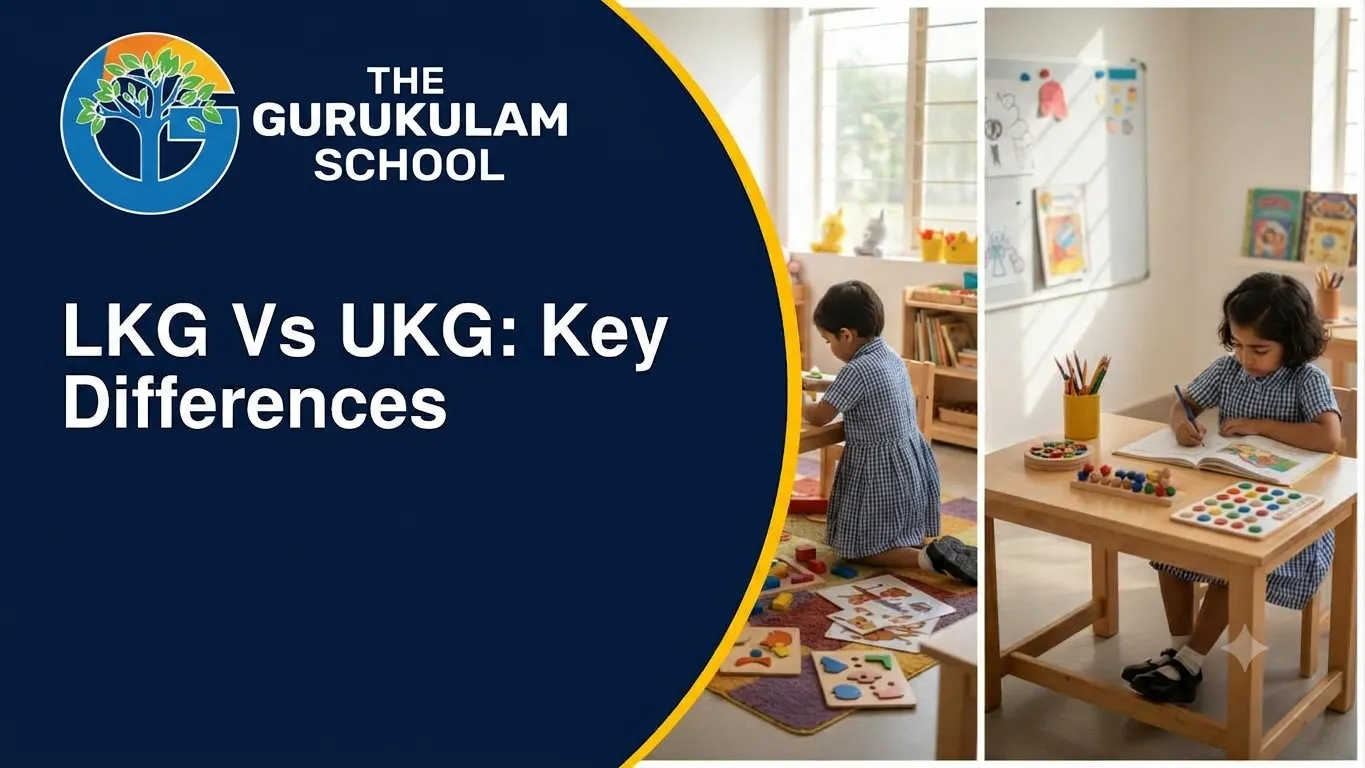
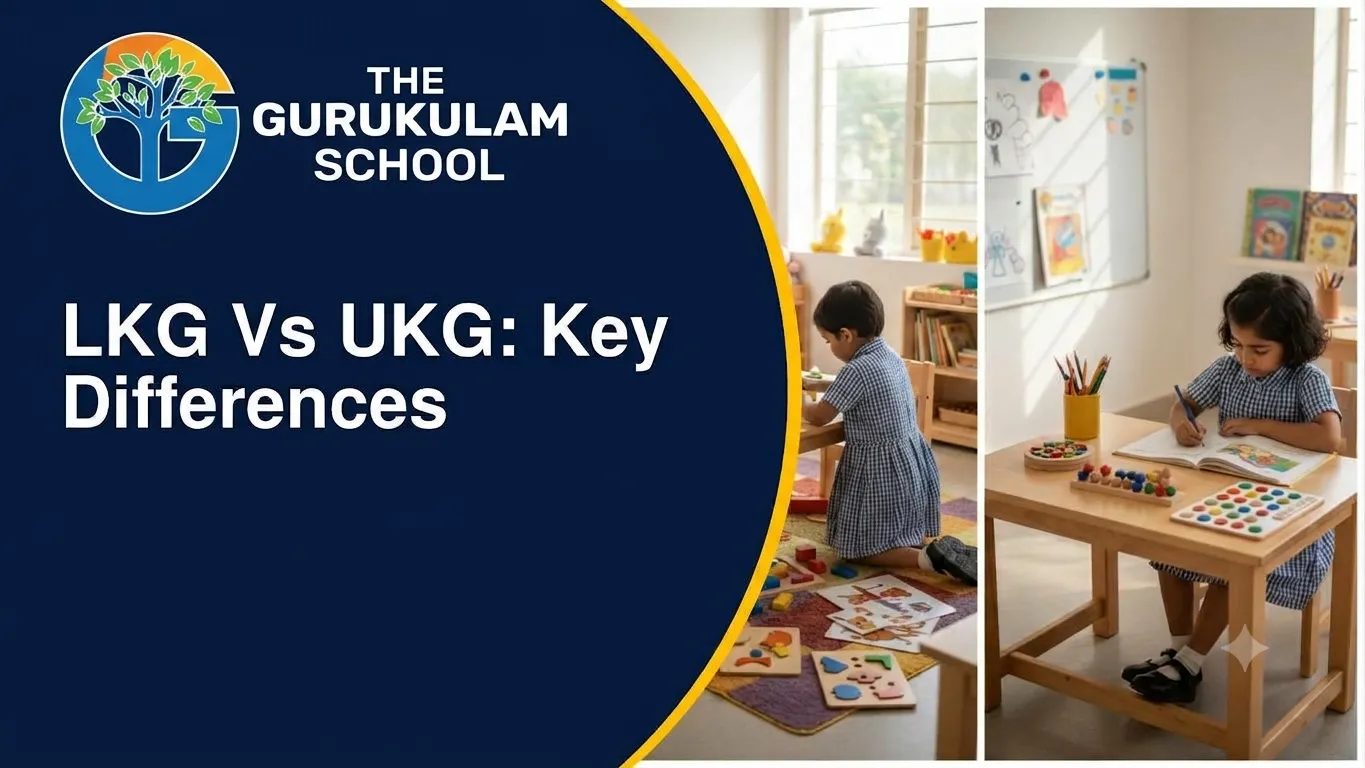
LKG and UKG are two early-years stages in many Indian schools. They help children develop foundational skills before moving to the next stage of schooling. Understanding LKG vs UKG helps parents compare the two levels and understand their child's learning journey.
The main differences relate to their usual sequence, learning focus, classroom activities, and readiness for the next stage. Parents can also explore The Gurukulam School (TGS) to learn about its school offerings and admission process.
What Is the Full Form of LKG and UKG?
The lkg ukg full form refers to the complete names of these two kindergarten levels.
|
Abbreviation |
Full form |
Usual role |
|
LKG |
Lower Kindergarten |
Introduces children to kindergarten learning |
|
UKG |
Upper Kindergarten |
Builds on foundational skills before the next stage |
The meaning of LKG and UKG is connected to their usual sequence in early-years education. LKG commonly comes first, followed by UKG.
Also Check: Nursery Admission Age
What Is LKG?
LKG stands for Lower Kindergarten. It is usually the first kindergarten level in schools that follow this system.
The main purpose of LKG is to introduce children to classroom learning and help them adjust to school routines.
Key learning areas in LKG Class include:
-
Language: Listening, conversation, and early language development.
-
Numbers: Introduction to numbers and basic mathematical concepts.
-
Stories and play: Learning through stories, games, and activities.
-
Social interaction: Communicating with classmates and participating in group activities.
-
Classroom routines: Becoming familiar with daily activities and instructions.
The exact learning approach may vary by school. Parents should check the admission age and class requirements before applying.
What Is UKG?
UKG stands for Upper Kindergarten. It commonly follows LKG and helps children prepare for the next stage of schooling.
At this level, children continue developing the skills introduced during their earlier kindergarten experience.
Key learning areas in UKG include:
-
Early reading and writing: Developing foundational literacy skills.
-
Number skills: Building on previously introduced mathematical concepts.
-
Communication: Expressing thoughts and interacting with others.
-
Independence: Becoming more confident with classroom tasks and routines.
-
School readiness: Developing foundational skills for the next stage of learning.
The curriculum and teaching methods may differ across schools. Parents should confirm the learning expectations with their chosen school.
LKG vs UKG: What Is the Difference?
The main difference between LKG and UKG is their position in the kindergarten sequence and their learning focus.
|
Comparison area |
LKG |
UKG |
|
Full form |
Lower Kindergarten |
Upper Kindergarten |
|
Usual sequence |
First kindergarten level |
Usually follows LKG |
|
Learning focus |
Foundational concepts and classroom adjustment |
Building foundational skills and school readiness |
|
Language |
Listening and basic communication |
Developing communication and early literacy |
|
Number skills |
Introduction to numbers and basic concepts |
Further practice with number skills |
|
Classroom activities |
Play, stories, conversation, and group activities |
Continued play-based learning with more developed practice |
|
Independence |
Adjusting to routines and group learning |
Growing confidence and independence |
|
Next stage |
Builds the foundation for further learning |
Helps prepare children for the next school stage |
Note: The curriculum, age requirements, and class names may vary by school and location.
What Do LKG and UKG Mean for a Child's Learning Journey?
Both stages contribute to a child's early learning experience. However, their focus changes as children become more familiar with school.
During LKG, children generally begin to:
-
Adjust to classroom routines.
-
Participate in group activities.
-
Explore basic language and number concepts.
-
Interact with teachers and classmates.
During UKG, children generally continue to:
-
Develop early reading and writing skills.
-
Practise number concepts.
-
Communicate with greater confidence.
-
Become more independent in classroom activities.
-
Prepare for the next stage of schooling.
Children develop at different rates. Their readiness depends on more than academic skills. Communication, social interaction, and comfort with classroom routines are also important considerations.
How Can Parents Choose Between LKG and UKG?
Parents should consider their child's previous Nursery Admission schooling, readiness, and the school's admission 2027-28 requirements before selecting a class.
Use the following checklist to guide your decision.
-
Check the age criteria: Confirm the school's age requirements for each class.
-
Review previous schooling: Consider whether the child has attended preschool or another early-years programme.
-
Understand the curriculum: Ask about the learning areas, activities, and classroom approach.
-
Consider classroom readiness: Discuss the child's communication, interaction, and familiarity with routines.
-
Ask about placement: Contact the school to understand its admission and class-allocation process.
Parents should not select a class based only on its name. The school's requirements and the child's individual circumstances should guide the decision.
Early Years at The Gurukulam School TGS
Parents interested in early-years education can visit The Gurukulam School Website to learn about its offerings and admission process.
Before applying, confirm the following details directly with the school:
-
Available classes and School Admission requirements.
-
Age criteria for the relevant academic session.
-
Curriculum and teaching approach.
-
Classroom facilities and learning environment.
-
Admission procedure and required documents.
Understanding the transition between early-years classes can help parents make informed decisions. You can learn more about the difference between Nursery, LKG, and UKG to understand how these stages differ.
The Gurukulam School TGS Admissions 2027-28 Open! Discover a learning environment where children learn, explore, and grow with confidence. Enquire now for admission details.
Explore early-years admissions at TGS School to learn about the available classes and admission requirements.
LKG vs UKG FAQs
What is the full form of LKG?
What is the full form of UKG?
What is meant by LKG and UKG?
What is the difference between LKG and UKG?