


What Is LKG Class? Meaning, Full Form, Age, and Subjects
LKG stands for Lower Kindergarten and is a pre-primary class that usually comes after Nursery and before UKG. Children are generally around 4 to 5 years old when they join LKG. Common LKG subjects include language, early mathematics, environmental awareness, art, music, and movement. The aim is to help children develop basic skills through play and classroom activities.

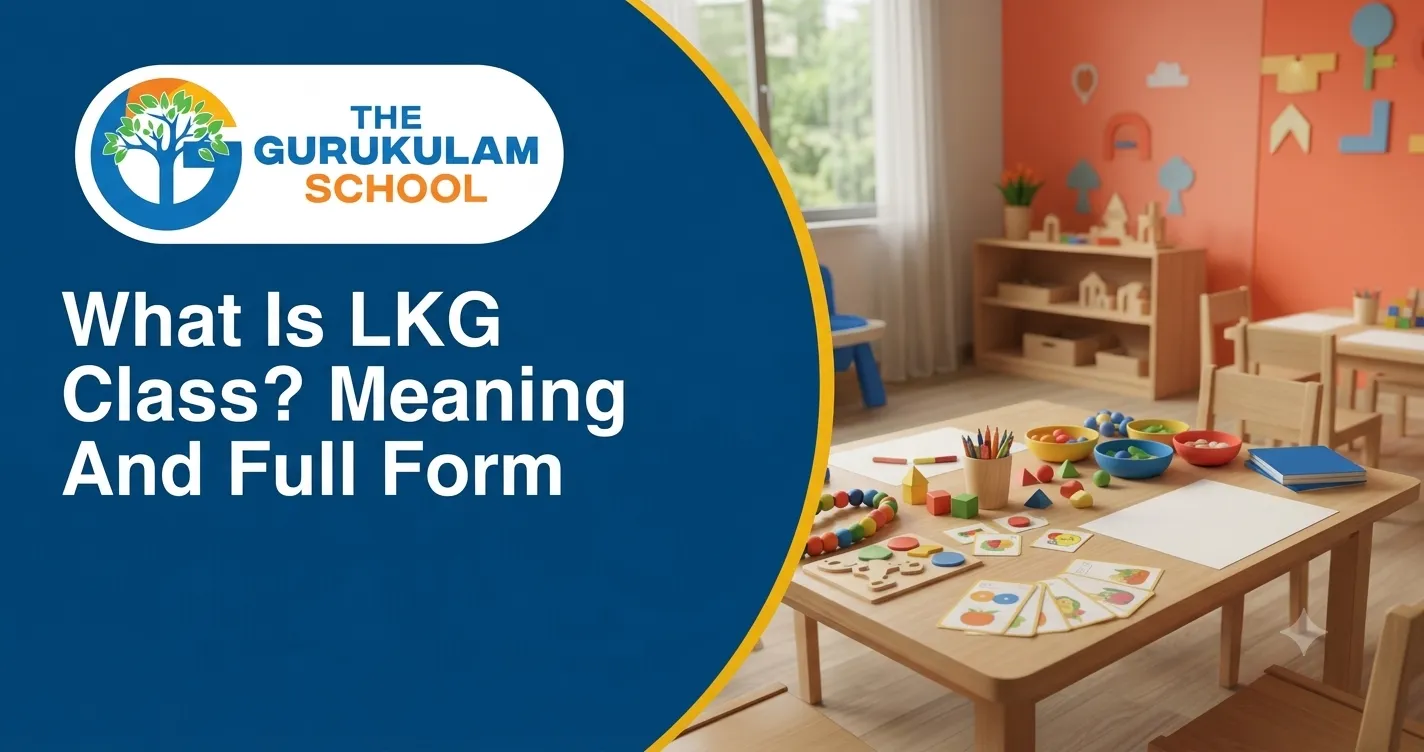
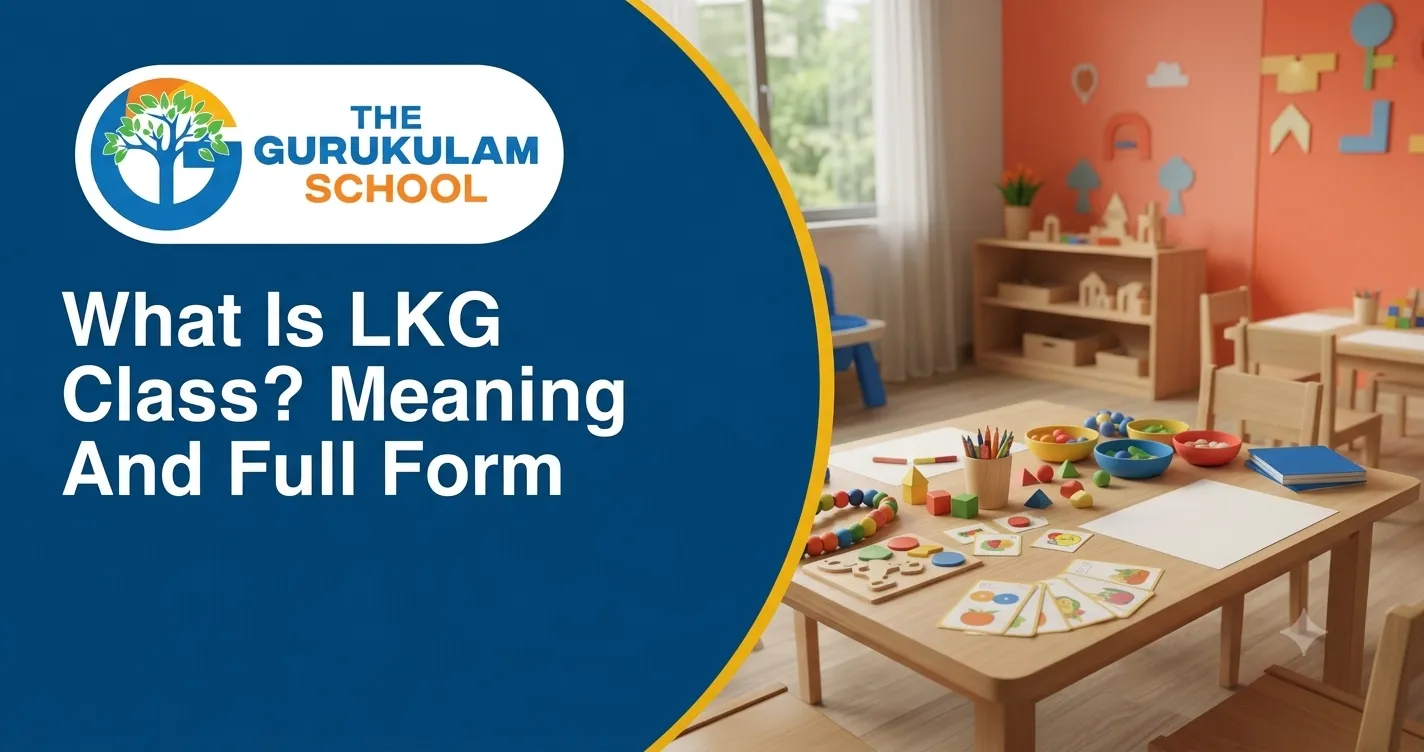
LKG (Lower Kindergarten) is an early stage of formal education for children, usually between 3 and 4 years of age. It helps children become familiar with a school environment and learn basic concepts through fun and interactive activities. At this stage, children begin to recognise letters, numbers, colours, shapes, and simple words. They also learn rhymes, drawing, storytelling and basic counting.
The main aim of LKG Class is to support children's overall development and prepare them for the next stage of schooling. Classroom activities help improve their speaking skills, creativity, motor skills, and ability to interact with others. LKG builds a strong foundation for early learning and prepares children for UKG (Upper Kindergarten).
What Is LKG Class?
LKG stands for Lower Kindergarten. It is a pre-primary class that usually comes after Nursery and before UKG (Upper Kindergarten). Children begin learning basic letters, numbers, colours, shapes and everyday words at this stage.
The LKG class also helps children become comfortable with teachers, classmates and classroom routines. Instead of focusing only on books, learning often includes stories, rhymes, drawing, games and group activities.
The exact class sequence and curriculum may differ from one school to another. Parents should check the admission rules and learning approach of their preferred school before applying.
Also Check: Nursery Admission Age
What Is the Full Form of LKG?
The full form of LKG is Lower Kindergarten. It is a common term used by schools in India for an early stage of pre-primary education.
Here is a quick explanation:
|
Term |
Full Form or Meaning |
|
LKG |
Lower Kindergarten |
|
UKG |
Upper Kindergarten |
|
Nursery |
An early pre-primary class that generally comes before LKG |
LKG prepares children for the next stage of learning by helping them develop early language, number recognition, communication, and social skills.
What Is the Full Form of LKG in Hindi?
LKG ki full form Lower Kindergarten hai. Hindi mein ise प्रारंभिक किंडरगार्टन कक्षा kaha ja sakta hai.
यह छोटे बच्चों की शुरुआती शिक्षा का एक स्तर है, जिसमें उन्हें खेल, कहानियों, कविताओं और गतिविधियों के माध्यम से बुनियादी बातें सिखाई जाती हैं।
Also Check: LKG UKG Full Form
What Is the Meaning of LKG in School?
The LKG meaning in school refers to an early learning stage where children start developing the skills they will need in later classes. It is not just about learning the alphabet or counting. Children also learn how to listen, communicate, share and take part in group activities.
During LKG, children may begin to:
-
Recognise letters and their sounds.
-
Identify numbers, shapes and colours.
-
Listen to stories and recite simple rhymes.
-
Follow basic classroom instructions.
-
Hold pencils and crayons and practise drawing.
-
Share toys and interact with other children.
-
Develop confidence while speaking and participating in activities.
The National Curriculum Framework for the Foundational Stage by NCERT emphasises learning through play, interaction and hands-on activities. These approaches help young children build language, thinking and social skills.
What Is the Usual Age for LKG?
Children are generally around 4 to 5 years old when they attend LKG. However, the required age can vary depending on the school, location and admission session.
For example, The Gurukulam School lists the age range for Lower KG as 4+ to 5 years for the School admission 2027-28 session, with the age calculated against its stated cutoff date. Parents should check the latest requirements before submitting an application.
If you are planning admission for your child, check the school's official age criteria and confirm the child's date of birth against the applicable cutoff.
What Subjects Are Taught in LKG Class?
LKG subjects focus on basic concepts and everyday learning. The names of subjects and the activities included in them can differ between schools.
Common learning areas include:
|
Subject or Learning Area |
What Children Learn |
|
English or another language |
Letters, sounds, simple words, stories and rhymes |
|
Early Mathematics |
Counting, number recognition, shapes, sizes and patterns |
|
Environmental Awareness |
Family, animals, plants, food, transport and surroundings |
|
Art and Craft |
Drawing, colouring, painting and simple craft activities |
|
Music and Movement |
Songs, rhymes, actions, rhythm and physical coordination |
|
Communication and Social Skills |
Listening, speaking, sharing and working with others |
Some schools in India combine these areas through activity-based lessons instead of teaching each one as a separate subject. The main aim is to help children understand basic concepts in an enjoyable and age-appropriate way.
What Do Children Learn in LKG?
Children develop several early learning skills during LKG. The focus is on helping them understand their surroundings, communicate with others, and become comfortable with school.
Common learning activities include:
-
Language skills: Recognising letters, learning new words, listening to stories and speaking in simple sentences.
-
Number skills: Counting objects, identifying numbers and understanding basic comparisons such as big and small.
-
Creative skills: Drawing, colouring, singing, dancing and using different materials for craft activities.
-
Social skills: Sharing, taking turns, making friends and participating in group tasks.
-
Physical skills: Improving hand coordination through drawing, colouring, building blocks and play.
-
Everyday independence: Learning to keep belongings in place, follow routines and ask for help when needed.
Every child learns at a different pace. Parents do not need to expect the same level of progress from every child at the same time.
How Is LKG Different From Nursery and UKG?
Nursery, LKG, and UKG are commonly used names for different stages of pre-primary education. They usually follow a sequence, but the exact arrangement may vary between schools.
|
Class |
General Place in the School Sequence |
Main Learning Focus |
|
Nursery |
Usually the earlier pre-primary level |
Familiarity with school, play, communication and basic concepts |
|
LKG |
Lower Kindergarten |
Early language, numbers, shapes, colours and social skills |
|
UKG |
Upper Kindergarten, usually after LKG |
Building on early skills and preparing for Class 1 |
How Can Parents Prepare a Child for LKG?
Starting school can be a new experience for both children and parents. A few simple steps can help children feel more comfortable before joining LKG.
-
Build a daily routine: Set regular times for waking up, eating, playing and sleeping.
-
Read together: Read picture books and ask your child simple questions about the pictures.
-
Practise basic concepts through play: Use toys, blocks and household objects to introduce colours, shapes and counting.
-
Encourage conversation: Give your child time to talk about their day, interests and feelings.
-
Support independence: Encourage simple tasks such as putting away toys, carrying a school bag and asking for help.
-
Make school familiar: Talk positively about teachers, classmates and classroom activities without putting pressure on your child.
There is no need to make children complete formal worksheets or memorise large amounts of information before starting LKG. Play, conversation and regular routines can help them become more confident.
LKG, or Lower Kindergarten, is an early stage of schooling that helps children build basic academic, social and communication skills. Common LKG subjects include language, early mathematics, environmental awareness, art, music and movement. The usual age is around 4 to 5 years, but parents should confirm the current admission rules of their chosen school.
The Gurukulam School TGS Admissions 2027-28 Open! Discover a learning environment where children learn, explore, and grow with confidence. Enquire now for admission details.
What Is LKG Class FAQs
What is the full form of LKG?
What does LKG mean in school?
What are the common LKG subjects?
Is LKG compulsory for children?