



Nursery Curriculum in India: Subjects, Activities & Learning Goals
The nursery curriculum in India focuses on language, early maths, creativity, physical development, and social skills through play-based learning. For children aged 3 to 4 years, it includes age-appropriate activities that support early learning, communication, motor skills and social development.

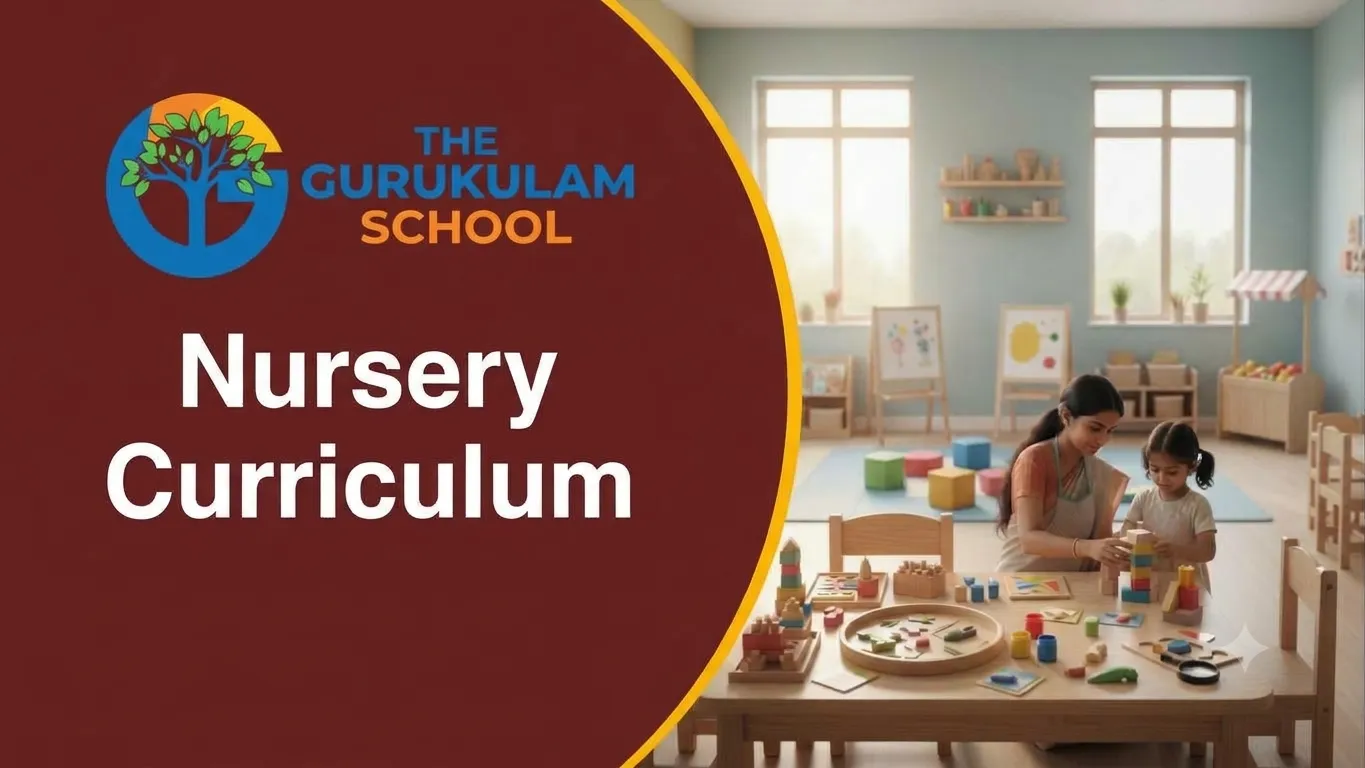
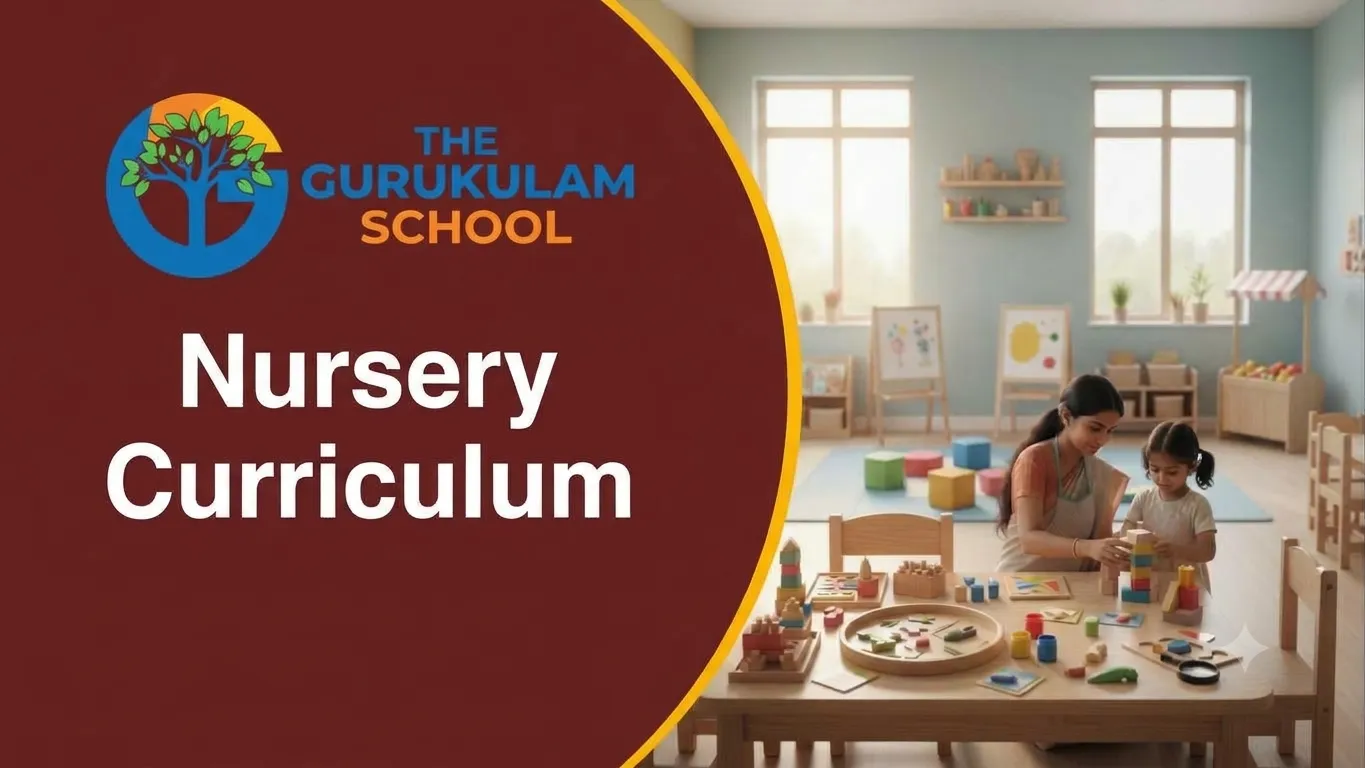
The nursery curriculum in India focuses on helping young children learn through play, stories, music, movement and everyday experiences. At this stage, children begin to recognise sounds, colours, shapes and numbers while learning to communicate and interact with others. The exact nursery school syllabus may vary from one school to another, but the main aim is to support a child's overall development in a happy and safe environment.
For parents choosing a preschool, understanding the curriculum can help them know what their child will learn and how these early experiences prepare them for the next stage of school.
What Is the Nursery Curriculum in India?
The nursery curriculum is a set of learning goals, activities, and experiences planned for children in their early years of education. It helps them develop basic language skills, early mathematical understanding, physical coordination, creativity, and social skills.
Unlike higher classes, nursery education does not need to focus on textbooks, written tests, or memorising long answers. Children learn better when they can touch, see, hear, move and try things themselves.
India does not have one identical nursery syllabus followed by every preschool. Schools may follow different teaching approaches and activity plans. However, the National Council of Educational Research and Training (NCERT) provides guidance through its Preschool Curriculum and the National Curriculum Framework for the Foundational Stage (2022).
These frameworks emphasise learning through play and experiences that support children's physical, cognitive, language, social and emotional development.
What Is the Right Age for Nursery Admission 2027-28?
Children generally enter nursery at around three years of age. However, the exact age requirement depends on the school's admission policy and applicable state rules.
For The Gurukulam School, the age criteria shared for admission are:
|
Class |
General age criteria |
|
Pre-nursery |
2+ years |
|
Nursery |
3+ years |
|
LKG |
4+ years |
|
UKG |
5+ years |
|
Class 1 |
6+ years |
Parents should confirm the applicable cut-off date and eligibility requirements with the school before applying for the 2027-28 academic session.
You can also read about nursery admission age criteria to understand the age requirements and plan your child's admission accordingly.
What Are the Main Learning Areas in a Nursery Class Syllabus 2027-28?
The nursery class syllabus introduces children to basic concepts through simple, age-appropriate activities. Instead of treating every subject as a separate academic task, many preschools combine different learning areas during classroom activities.
Here are the main nursery subjects and skills children may learn.
1. Language and Communication
Language activities help children understand words, express their needs, and communicate with teachers and classmates. At this age, listening and speaking are important parts of learning.
Children may practise:
-
Recognising letters and becoming familiar with their sounds.
-
Listening to short stories and rhymes.
-
Naming familiar objects, animals, fruits and vegetables.
-
Describing pictures using simple words.
-
Answering basic questions and speaking in short sentences.
-
Following simple classroom instructions.
Schools may introduce English, Hindi or other languages depending on their teaching approach. Formal reading and writing expectations can also differ between schools.
2. Early Mathematics
Early maths helps children understand numbers, quantities, patterns and shapes through everyday objects and games.
Activities may include:
-
Counting familiar objects.
-
Recognising numbers and matching them with quantities.
-
Identifying basic shapes such as circles, squares and triangles.
-
Sorting objects by colour, size or shape.
-
Understanding simple concepts such as big and small, more and less, and long and short.
-
Arranging objects in simple patterns.
For example, a teacher may ask children to count three blocks or sort red and blue balls into separate groups. These activities build early mathematical understanding without making learning difficult.
3. Environmental Awareness
Children are naturally curious about the people, objects, and places around them. Environmental awareness activities help them observe and understand their surroundings.
The nursery syllabus may introduce:
-
Family members and relationships.
-
Common animals and birds.
-
Fruits, vegetables and plants.
-
Weather and seasons.
-
Parts of the body and the five senses.
-
Personal hygiene and cleanliness.
-
Familiar places such as home, school and the park.
Teachers may use picture cards, nature walks, classroom discussions and simple demonstrations to introduce these topics.
4. Physical Development
Physical activities help children improve balance, coordination, strength and control over their body movements. They also provide opportunities to develop independence and confidence.
Common activities include:
-
Running, jumping and hopping.
-
Throwing and catching soft balls.
-
Dancing to music.
-
Playing with building blocks.
-
Using crayons and child-safe art materials.
-
Practising simple hand movements and puzzles.
These experiences also help develop fine motor skills, which children gradually use for drawing, handling objects and early writing activities.
5. Social and Emotional Development
Nursery is often one of a child's first experiences in a group learning environment. Children begin to understand how to interact with others, express feelings and participate in shared activities.
The curriculum may help children learn to:
-
Share toys and classroom materials.
-
Take turns during games.
-
Recognise and express basic emotions.
-
Follow simple classroom routines.
-
Ask for help when needed.
-
Show kindness towards classmates and living things.
-
Complete small tasks with growing independence.
Teachers support these skills through group play, conversations, stories and everyday classroom situations.
6. Art, Music and Creative Expression
Art and music allow children to express their ideas and explore different materials. These activities also make learning enjoyable and encourage imagination.
Children may take part in:
-
Drawing and colouring.
-
Finger painting with child-safe materials.
-
Paper tearing and pasting.
-
Clay modelling.
-
Singing rhymes and action songs.
-
Dancing and moving to music.
-
Role-play and puppet activities.
The aim is to give children opportunities to experiment and express themselves rather than expecting every child to produce the same finished work.
How Does Play-Based Learning Work in the Nursery Curriculum?
Play-based learning for nursery children uses games, stories, toys, movement, and exploration to introduce new ideas. It allows children to learn through direct experience instead of relying only on instructions or worksheets.
NCERT's National Curriculum Framework for the Foundational Stage (2022) places play at the centre of learning during the early years. It discusses different forms of play, including free play and guided play.
Free play gives children time to choose activities according to their interests. They may build with blocks, explore puzzles, play with dolls, or look at picture books.
Guided play involves a teacher supporting an activity with a learning goal. For example, a teacher may encourage children to sort blocks by colour or count objects while playing.
Both approaches can help children develop language, problem-solving, creativity and social skills. The teacher's role is to provide suitable materials, encourage curiosity and support children when they need help.
You can read the NCERT National Curriculum Framework for the Foundational Stage for further details.
What Nursery Learning Activities Help Children Develop Key Skills?
Nursery learning activities help children practise new skills in familiar and enjoyable ways. Schools can combine several learning areas in one activity instead of teaching every concept separately.
|
Learning activity |
Skills children can develop |
|
Storytelling and picture talk |
Listening, vocabulary and communication |
|
Rhymes and action songs |
Language, memory and coordination |
|
Counting blocks or toys |
Number recognition and early maths |
|
Sorting coloured objects |
Observation, classification and logical thinking |
|
Drawing and colouring |
Creativity and hand control |
|
Clay modelling |
Imagination and fine motor skills |
|
Outdoor games |
Balance, movement and coordination |
|
Pretend play |
Communication, imagination and social skills |
|
Watering plants |
Environmental awareness and responsibility |
|
Group games |
Sharing, turn-taking and cooperation |
Teachers can adapt these activities to children's interests and developmental needs. For example, a fruit-sorting activity can help children recognise colours, name fruits, compare sizes and count objects at the same time.
What Should a Nursery Curriculum for 3 to 4 Year Olds Focus On?
A nursery curriculum for 3 to 4 year olds should focus on gradual development rather than strict academic targets. Children develop at different rates, so activities should provide opportunities to learn without creating unnecessary pressure.
At this age, learning goals may include:
-
Communication: Listening to short stories, learning new words and expressing basic needs.
-
Early maths: Exploring quantities, shapes, patterns and simple counting activities.
-
Physical skills: Running, jumping, drawing, stacking blocks and handling objects.
-
Social skills: Playing alongside other children, sharing materials and participating in group activities.
-
Emotional development: Recognising feelings, asking for help and gradually adjusting to classroom routines.
-
Creativity: Exploring art, music, movement and pretend play.
-
Independence: Beginning to manage simple tasks, put away toys and follow familiar routines.
Parents should remember that these are broad developmental goals, not compulsory milestones that every child must achieve at the same time. The purpose of nursery education is to encourage learning and confidence in a supportive environment.
How Can Parents Choose a Nursery School Curriculum?
When choosing a nursery school, parents should look beyond the number of worksheets or letters a child is expected to learn. The quality of everyday learning experiences is equally important.
Consider the following factors before making a decision.
1. Check the Teaching Approach
Ask whether the school uses stories, games, hands-on activities, music and outdoor play. A good early-years programme should give children opportunities to explore and participate actively.
2. Look at the Classroom Environment
The classroom should be safe, welcoming and suitable for young children. Age-appropriate toys, books, art materials and activity spaces can make a difference to the learning experience.
3. Understand the Language Approach
Check which languages teachers use for classroom communication and how the school introduces additional languages. The approach should help children communicate comfortably while developing their language skills.
4. Ask About Teacher Interaction
Young children benefit from patient teachers who listen to them, encourage questions and support their individual needs. Ask how teachers help children adjust to school and participate in group activities.
5. Check How Progress Is Monitored
Nursery learning should not depend only on marks or written tests. Ask whether teachers observe children's participation, communication, physical skills, independence and social development.
6. Understand the School's Learning Plan
Ask for details about the nursery syllabus, daily routine, activity schedule, and parent-teacher communication. This helps you understand what your child will experience throughout the academic year.
If you are comparing schools, explore the CBSE school options at The Gurukulam School to learn more about the school and its available information. Parents planning ahead can also check the School Admission 2027-28 details for admission-related information.
The nursery curriculum in India helps children develop basic language, maths, social and creative skills through play and everyday experiences. For children aged 3 to 4 years, learning should be enjoyable, age-appropriate, and free from unnecessary academic pressure. Understanding the curriculum can help you choose a school that supports your child's early learning and overall development.
Nursery Curriculum in India FAQs
What is taught in nursery in India?
Is there one common nursery syllabus across India?
What should a nursery-age child learn?